
How different cultures around the world deal with death.


How different cultures around the world deal with death. Read More »


Death is a common human experience that transcends culture, religion and geography. Despite the different beliefs, customs and practices related to death, the themes of grief, loss and death are everywhere. This article takes a closer look at the world’s death culture, examining how different cultures approach death and mourning, and how these practices reflect larger traditions and beliefs. Cultures around the world have unique ideas about death. Many Western cultures avoid it, while Eastern cultures consider death a natural part of life. African cultures see death as a journey, and the afterlife is often celebrated. In the United States, cremation practices have begun to include funeral services, and there is a growing push for more traditional ways to bring about death. Cultural values and beliefs play an important role in death rituals. For example, cultures in which death is accepted as a part of life have less anxiety and place more emphasis on celebrating life.
In Japan, the Buddhist custom of Obon, celebrated in August, reflects the belief that the spirits of the deceased return to visit their families during this time. To honor these spirits, families light lanterns and place them on the graves of their loved ones, guiding the spirits back to the world of the living. A significant part of the celebration is the traditional Bon dance, which communities perform together to welcome the spirits.
In Mexico, Día de los Muertos, or the Day of the Dead, is a vibrant celebration held from October 31 to November 2. During this time, it is believed that the souls of the dead return to the world of the living. Families create elaborate altars in their homes, adorned with marigold flowers, candles, and offerings of food and drink that the deceased loved. Cemeteries become lively places where families clean and decorate graves, leaving offerings and spending time with the spirits of their ancestors.
In Ghana, particularly among the Akan people, death is marked by the Adowa ceremony, a vibrant celebration of life. This ceremony, which can last several days, involves drumming, singing, and dancing to honor the deceased. Rather than being somber, the Adowa is a joyful occasion where the community comes together to celebrate the life and legacy of the person who has passed.
In Bali, Indonesia, the Hindu population observes a unique cremation ritual known as Ngaben. The body of the deceased is placed in a specially crafted sarcophagus, often shaped like an animal or mythological creature, which is then burned in a public ceremony. The ritual is believed to liberate the soul from the physical body, allowing it to begin its journey to the afterlife. The ashes are typically scattered in the sea, symbolizing the soul’s return to the natural world.
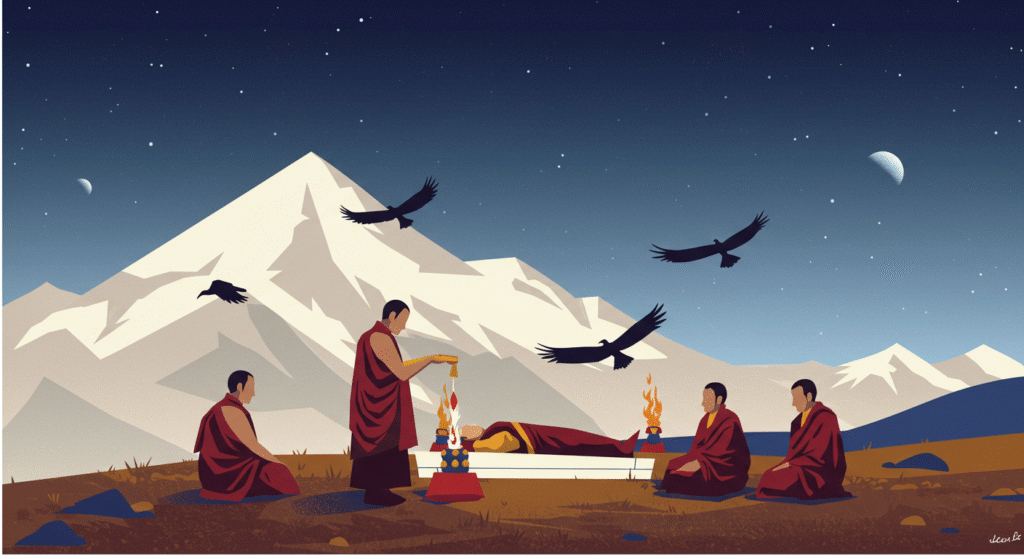
In Tibet, the practice of Sky Burial is a deeply spiritual Buddhist tradition. In this ritual, the body of the deceased is offered to vultures, symbolising the return of the body to the natural cycle of life and death. This practice reflects the belief in impermanence and the importance of helping the soul transition smoothly into the afterlife. The Sky Burial is both a practical and sacred act, rooted in the region’s unique spiritual and environmental context.
You can read more about the Mexican festival “Day of the Dead” with this books:
https://fivebooks.com/best-books/regina-marchi-on-the-day-of-the-dead/
How different cultures around the world deal with death. Read More »

The death of a loved one is one of life’s most profound and life-altering experiences. Grief—the natural response to loss—can feel overwhelming, often leaving people struggling to find meaning, stability, and a way forward. While no two grief journeys are identical, understanding the five stages of bereavement can provide comfort, guidance, and a sense of structure in navigating this emotional process.
In this article, we’ll explore the five stages of grief, what they mean, why they’re not always linear, and how self-care and support can help you cope with loss and begin healing.
The concept of the five stages of grief was first introduced by psychiatrist Elisabeth Kübler-Ross in her groundbreaking 1969 book On Death and Dying. These stages—denial, anger, bargaining, depression, and acceptance—offer a framework for understanding the complex emotions associated with loss.
It’s important to note that grief does not follow a strict timeline or sequence. You may move back and forth between stages, skip some altogether, or revisit them multiple times. Grief is deeply personal, and there is no “right” or “wrong” way to mourn.
Stage 1: Denial – Protecting the Mind from Shock
Stage 2: Anger – The Search for Someone to Blame
When denial fades, it’s common to experience anger—a powerful and often misunderstood stage of grief. This anger may be directed at:
While anger may feel uncomfortable, it is a normal part of grieving. Finding healthy outlets—such as exercise, journaling, or talking with a trusted friend—can help release frustration and prevent it from turning inward.
Stage 3: Bargaining – The “If Only” Stage
During bargaining, individuals try to regain a sense of control by negotiating with a higher power, fate, or themselves. Common thoughts include:
While bargaining often leads to feelings of guilt or regret, it is also an expression of deep love and the desperate wish to change reality. Recognizing that these thoughts are natural—but not rational—is key to moving forward.
Stage 4: Depression – Confronting the Depth of Loss
The fourth stage of grief, depression, is often the most intense. It is marked by:
Stage 5: Acceptance – Learning to Live with Loss
Acceptance does not mean “getting over” a loved one’s death. Instead, it represents a shift in perspective: acknowledging the reality of the loss and learning to live with it. Signs of acceptance may include:
Acceptance is not a final destination—it’s an ongoing process. Sadness, longing, or even anger may resurface, but they become easier to carry as time passes.
It’s crucial to understand that grief is not a straight line. Some people experience all five stages, while others experience only a few. The order may vary, and emotions may resurface unexpectedly—even years later.
Factors that influence the grieving process include:
There is no set timeline for grief. Some people find peace within months, while others may grieve for years.
Coping with grief takes a toll on both mental and physical health. Practicing intentional self-care can help restore balance. Consider:
Though grief changes you forever, it is possible to find hope, healing, and meaning again. Many people honor loved ones by:
Grief may always be a companion, but over time, it transforms from an unbearable weight into a softer, more manageable presence—allowing you to carry love and memory forward.
The **five stages of grief—denial, anger, bargaining, depression, and acceptance—**offer a powerful framework for understanding the grieving process. While these stages are universal in concept, every grief journey is unique.
By practicing self-care, seeking support, and allowing yourself patience and compassion, healing is possible. Grief may never fully disappear, but it can become integrated into a meaningful and fulfilling life.
For deeper guidance, consider reading Elisabeth Kübler-Ross’s On Death and Dying, which remains a foundational work on bereavement and emotional healing.
The 5 Stages of Grief: Understanding Bereavement and Finding Healing Read More »
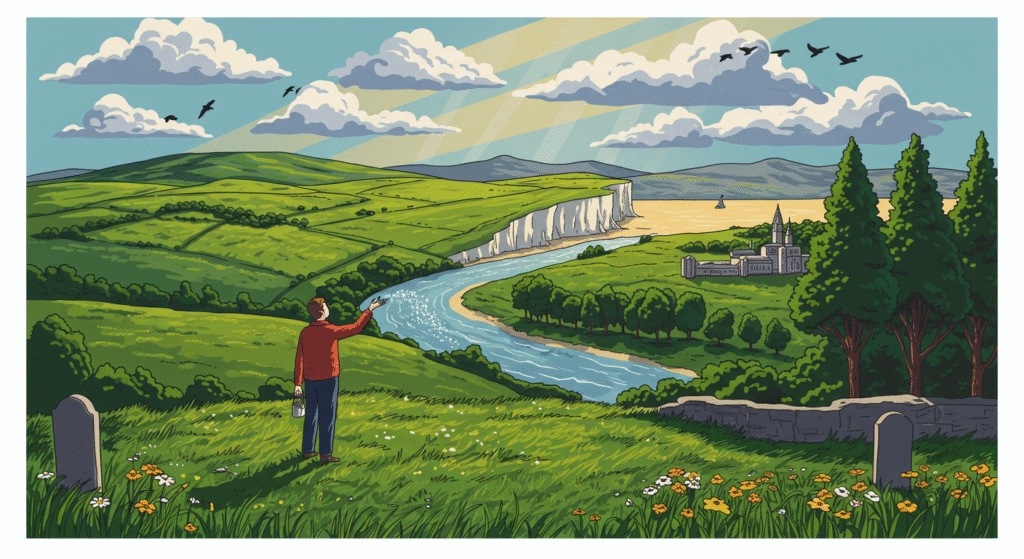
Scattering ashes is a deeply personal and meaningful way to honor the memory of a loved one. Choosing a final resting place often reflects the connection someone had with nature, a favorite place, or a landscape that evokes cherished memories. The act of scattering ashes allows family and friends to say their farewells in a serene, intimate setting and can serve as a moment of reflection and closure.
The United Kingdom, with its diverse landscapes, historic sites, and natural beauty, provides countless options for scattering ashes. From the rolling hills of England to the rugged mountains of Scotland, there is a location to suit every sentiment. It is important, however, to check local regulations before scattering ashes, as different areas have specific rules and guidelines.
Some families choose to keep a portion of the ashes in an urn or special container as a lasting memento, while others may scatter all of the ashes in one meaningful location. The ceremony can be simple or more elaborate, intimate or communal, but in every case, it becomes a way to celebrate a life and preserve memories in a setting that speaks to the soul.

The Lake District is renowned for its breathtaking scenery, with shimmering lakes framed by rolling hills and charming villages. Its tranquil ambiance makes it an ideal choice for scattering ashes, offering a peaceful environment where loved ones can reflect and remember. Many families find comfort in walking along quiet lakeshores, listening to the gentle ripple of water, or pausing atop a hill to watch the sun cast golden hues across the fells.
This region’s natural beauty provides more than a backdrop; it creates an experience of connection with nature. Each lake, valley, and woodland carries its own quiet charm, allowing mourners to find solace and a sense of continuity in the rhythms of the landscape.

For those seeking solitude and rugged beauty, the Scottish Highlands offer unmatched natural majesty. Towering mountains, sparkling lochs, and ancient forests create a dramatic and serene environment for scattering ashes. The Highlands are particularly suited to those who cherished adventure or the sense of freedom found in wide-open spaces.
Scattering ashes here allows a loved one to rest amidst landscapes that are timeless and powerful. The sense of remoteness and tranquility can help mourners feel a deep, enduring connection to nature, and the Highland skies often provide a stunningly beautiful canvas, whether in the glow of sunrise or the quiet of twilight.

Nestled in northern England, the Yorkshire Dales are famous for their rolling hills, limestone cliffs, and quaint villages. This region offers peace, privacy, and space for reflection, making it a fitting location for a farewell ceremony. Families can walk along quiet country lanes, pause near babbling streams, or scatter ashes amidst fields dotted with wildflowers.
The Dales’ natural beauty and understated charm provide a comforting atmosphere, helping mourners connect with memories of a loved one in a place of calm and serenity. Its combination of scenic vistas and intimate corners ensures there is a location that resonates with everyone.

The South Downs National Park stretches across southern England, with rolling chalk hills, vast open fields, and dramatic cliffs along its southern edges. Scattering ashes in this location allows for a moment of quiet reflection while surrounded by beauty and tranquility. A gentle hillside, a secluded copse, or a spot overlooking far-reaching views can provide a deeply personal and meaningful setting for a farewell.
Visitors often note the feeling of expansiveness in the South Downs—the kind of space that encourages contemplation, introspection, and peace. Whether the ceremony is a private moment or shared with family and friends, the landscape itself lends comfort and serenity.
Whether you choose a quiet hillside, a secluded copse, or a spot with panoramic vistas, the South Downs provides a peaceful and natural location for a meaningful farewell.

Cornwall’s rugged coastline is renowned for its dramatic cliffs, golden beaches, and endless ocean vistas. Scattering ashes along the Cornish coast offers a powerful connection to nature, allowing loved ones to merge the memory of the departed with the timeless rhythm of the sea.
The wind, waves, and rocky shores create a setting that is both dramatic and calming. Many families find solace in the sound of the surf and the expansive views, which evoke reflection and the enduring passage of life. Cornwall’s coast is a location that captures both the power and serenity of nature.

The Isle of Skye is celebrated for its mystical landscapes, rugged mountains, and crystal-clear waters. This Scottish island offers a truly unique and unforgettable place to scatter ashes. Its dramatic vistas, from jagged peaks to tranquil lochs, provide a fitting tribute for those who appreciated wild and untamed beauty.
Visitors often feel a profound sense of peace here, where every viewpoint seems touched by magic. The combination of natural grandeur and quiet seclusion makes the Isle of Skye a location where memories can rest alongside the breathtaking scenery.

The New Forest combines ancient woodland, heathland, and quiet paths, creating a peaceful sanctuary for reflection. The region’s rich wildlife, dappled sunlight through towering trees, and gentle trails make it an ideal location for scattering ashes.
Whether it is a quiet glade, a sunlit path, or a spot overlooking open heathland, the New Forest offers an environment that encourages reflection, remembrance, and a sense of closeness to nature. Its gentle, unspoiled beauty makes it a meaningful resting place.

The Cairngorms National Park is one of Scotland’s most awe-inspiring landscapes, with rugged mountains, pristine lochs, and dense forests. Scattering ashes here offers a sense of remoteness and serenity, connecting loved ones with the enduring beauty of nature.
Whether choosing a secluded mountainside, a quiet loch shore, or a vantage point overlooking a vast valley, the Cairngorms provide a majestic backdrop that evokes reflection and peace. The sheer scale and tranquility of this region make it a fitting tribute to a life well-lived.
Choosing the right location for scattering ashes is deeply personal, and the United Kingdom’s rich variety of landscapes ensures that there is a place that resonates with every heart. Whether among lakes, hills, forests, or the open sea, these locations offer comfort, beauty, and a sense of enduring connection to the memory of a loved one.
8 Peaceful Places to Scatter ashes in the United Kingdom Read More »