
Death is a common human experience that transcends culture, religion and geography. Despite the different beliefs, customs and practices related to death, the themes of grief, loss and death are everywhere. This article takes a closer look at the world’s death culture, examining how different cultures approach death and mourning, and how these practices reflect larger traditions and beliefs. Cultures around the world have unique ideas about death. Many Western cultures avoid it, while Eastern cultures consider death a natural part of life. African cultures see death as a journey, and the afterlife is often celebrated. In the United States, cremation practices have begun to include funeral services, and there is a growing push for more traditional ways to bring about death. Cultural values and beliefs play an important role in death rituals. For example, cultures in which death is accepted as a part of life have less anxiety and place more emphasis on celebrating life.
1. Japan - Obon Festival
In Japan, the Buddhist custom of Obon, celebrated in August, reflects the belief that the spirits of the deceased return to visit their families during this time. To honor these spirits, families light lanterns and place them on the graves of their loved ones, guiding the spirits back to the world of the living. A significant part of the celebration is the traditional Bon dance, which communities perform together to welcome the spirits.


2. Mexico - Día de los Muertos (Day of the Dead)
In Mexico, Día de los Muertos, or the Day of the Dead, is a vibrant celebration held from October 31 to November 2. During this time, it is believed that the souls of the dead return to the world of the living. Families create elaborate altars in their homes, adorned with marigold flowers, candles, and offerings of food and drink that the deceased loved. Cemeteries become lively places where families clean and decorate graves, leaving offerings and spending time with the spirits of their ancestors.
3. Ghana - The Adowa Ceremony
In Ghana, particularly among the Akan people, death is marked by the Adowa ceremony, a vibrant celebration of life. This ceremony, which can last several days, involves drumming, singing, and dancing to honor the deceased. Rather than being somber, the Adowa is a joyful occasion where the community comes together to celebrate the life and legacy of the person who has passed.


4. Indonesia - Ngaben Cremation Ritual
In Bali, Indonesia, the Hindu population observes a unique cremation ritual known as Ngaben. The body of the deceased is placed in a specially crafted sarcophagus, often shaped like an animal or mythological creature, which is then burned in a public ceremony. The ritual is believed to liberate the soul from the physical body, allowing it to begin its journey to the afterlife. The ashes are typically scattered in the sea, symbolizing the soul’s return to the natural world.
5. Tibet - Sky Burial
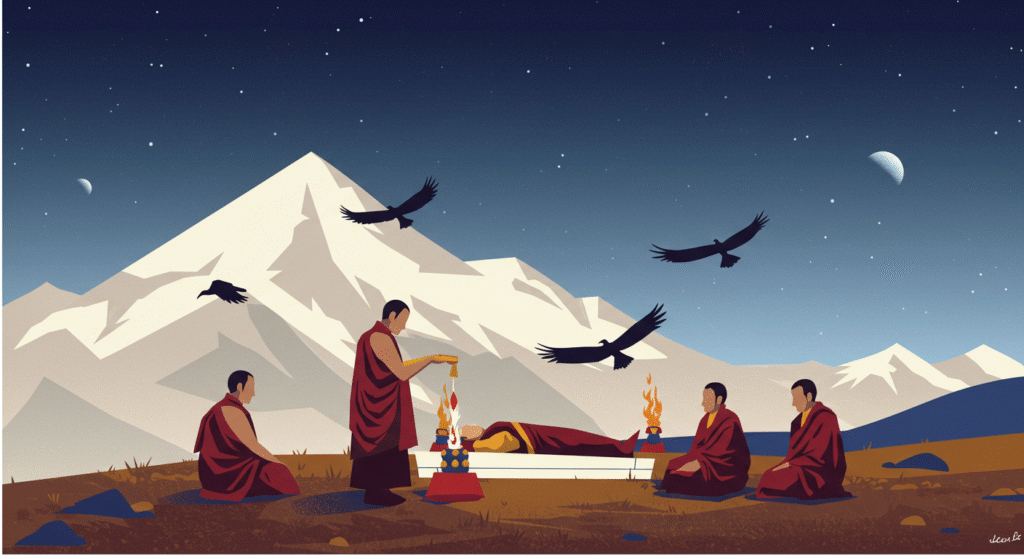
In Tibet, the practice of Sky Burial is a deeply spiritual Buddhist tradition. In this ritual, the body of the deceased is offered to vultures, symbolising the return of the body to the natural cycle of life and death. This practice reflects the belief in impermanence and the importance of helping the soul transition smoothly into the afterlife. The Sky Burial is both a practical and sacred act, rooted in the region’s unique spiritual and environmental context.
You can read more about the Mexican festival “Day of the Dead” with this books:
https://fivebooks.com/best-books/regina-marchi-on-the-day-of-the-dead/